

Digital marketing strategy for individual professionals, digital technology is transforming industry after industry, and it is professional services are no exceptions. A digital marketing strategy is a plan for using digital marketing tools and techniques to achieve a firm’s strategic marketing objectives, such as brand building or new business development. It is about crafting a thoughtful, comprehensive plan that considers your audience, goals, competition, and the unique attributes of each digital channel. In this article, we will discuss how to create a digital marketing strategy, what the most effective digital marketing strategies and why you need a digital marketing strategy in detail.
Digital marketing strategy
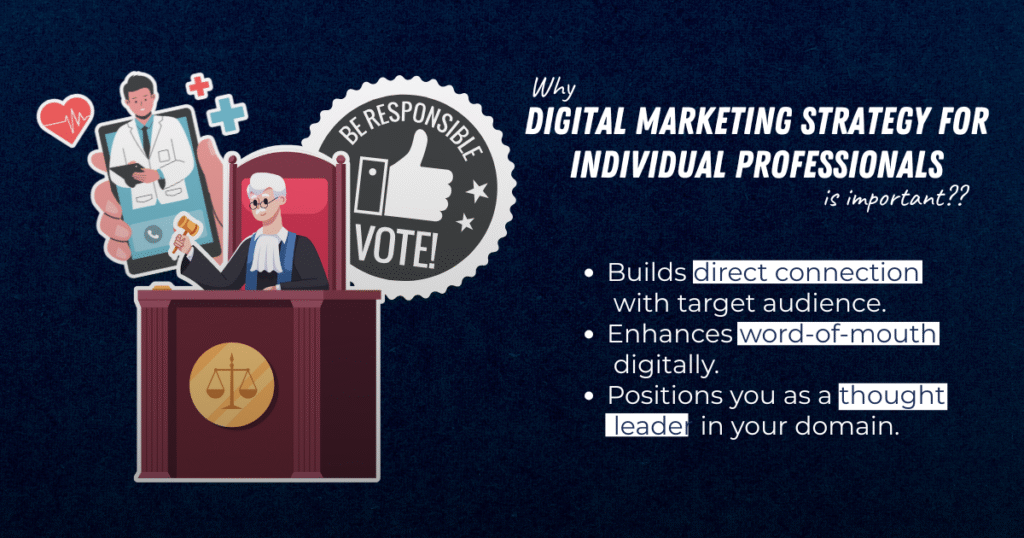
Digital marketing strategy is a high-level marketing plan. And strategy choices that set the direction for positioning your firm in the marketplace and the key message you will deliver to your audiences. The high-level strategy should be the same in both the digital and office worlds.
This is a part of the bigger marketing plan that uses both online and offline methods. It includes techniques like getting found on search engines, running online ads, sending emails, doing webinars using social media, having a website, creating podcasts, and using mobile apps. These online tools help reach people and promote things, and connect with the audience.c
In digital marketing, people mostly talk about strategy and techniques like they are the same thing. But for professional services like consulting, law, or healthcare, there`s a difference. Strategy is the overall plan to reach goals. And the techniques are the specific ways used to carry out the strategy.
How to Create a Digital Marketing Strategy
In the modern, intent-driven world it is having a digital marketing strategy is no longer a luxury, but s necessity. Digital marketing is not just about throwing content into the online world and hoping it sticks. Now, how to create a digital marketing strategy:-
1. Identify your audience
The first step in creating a digital marketing strategy is identifying and understanding your audience. This involves defining the characteristics of the people most likely to be interested in your product or service. In this, you can use demographic data like age, gender, location, and income. But it is also important to get your audience`s habits, interests, and the problems that you need to solve.
2. Define your Goals and objectives
This is the next step that clearly defines what you should achieve with your digital marketing strategy. It is important to set SMART goals: specific, measurable, achievable, relevant, and time-bound. Your goals should align with your overall business objectives and the goals. For example, an e-commerce painting store may have the goal of increasing website traffic by 50% in the next six months through SEO and content marketing.
3. Evaluate your Competitors
A thorough competitor analysis allows you to understand your industry landscape, identify key trends, and recognize opportunities to differentiate your business. Look at how your competitors position themselves, their pricing, their pricing, their marketing strategies, and the customer experiences they provide.
4. Determine Your Digital Marketing Channels
The Digital Marketing channels you choose to use It should depend on your audience and your goals. These could include search engine optimization (SEO), pay-per-click advertising (PPC), email marketing, social media marketing, content marketing, and more. Each channel offers different advantages and requires a different approach in the digital marketing strategy.
What are the Most Effective Digital marketing strategies?
The digital marketing strategies you use will depend on the needs and goals of your business: For example, to grow leads or build brand awareness.
- Content Marketing
There are many ways of generating leads, but one tried and tested method is by providing valuable content and using digital channels to promote it. Put some energy into creating a valuable e-book, or look at hosting a webinar with in-house staff or experts to drive leads and engagement.
- Social Media Marketing
Social media marketing is an effective way to reach and influence 4.6 billion people across the globe. Plus, depending on the network, social media has such reach that you can target specific age groups and locations. And this allows you to have meaningful engagement with prospects or customers and create brand advocates, who will promote your brand without being asked.
- SEO
Search Engine Optimization (SEO) is an important digital marketing strategy. The goal of SEO is to optimize your content – whether that’s a homepage, landing page, or blog – so it gets found easily by existing and prospective customers. But there are a few key elements of SEO to tap into user intent that you should consider: Keywords, Backlinks, Links, Meta Descriptions, and Images.
- Influencer Marketing
It is working with influencers it can help you to reach a specific group of people who are interested in what you offer. By partnering with an influencer who fits your brand and has followers interested in your product or service.
- Email Marketing
Email marketing is one of the oldest forms of digital marketing because it works despite the demise of third-party cookies and privacy concerns. It is becoming a bigger concern for customers, as email marketing roles that have shown an interest in their service.
Why Individual Professionals Need a Digital Marketing Strategy
A digital marketing strategy for individual professionals is a plan that uses online tools and methods to:
- Promote their services:
They promote their expertise and offerings online. Individual pros use digital marketing to show off their skills, share their services, get clients, and get noticed online. They highlight what they’re good at, talk about what they offer, and get people interested. When promoting stuff online, they gotta follow rules like saying if the content is sponsored. Digital Direct Rule company will help you promote your services. - Connect with potential clients: Connecting with potential clients for professionals like lawyers, doctors, or governance experts means using digital marketing to reach people who might need their services. Through these online channels, these professionals can share their expertise, highlight their services, and engage with potential clients. When doing this, they must comply with Digital Direct Rule guidelines, like disclosing sponsored content, and also follow industry-specific regulations. Target audiences interested in their work.
- Build their professional brand:
Establish an online presence. Building their professional means creating and promoting a strong online identity that showcases their expertise, values, and the service. You should connect with the potential client and differentiate yourself. When building their brand online. They need to comply with Digital Direct Rule guidelines and specific rules.
Conclusion
In this article, we discussed the Digital marketing strategy for individual professionals. It is changing the way professional services firms go to market with digital technology. It is transforming industry after industry, and it is professional services are no exceptions. For more information, you can visit our website, Digital Direct Rule Company. Digital Direct Rule company or its founder Jyoti Rani Mistri, it’s challenging to define its role in promoting law, medical, or governance professionals.