
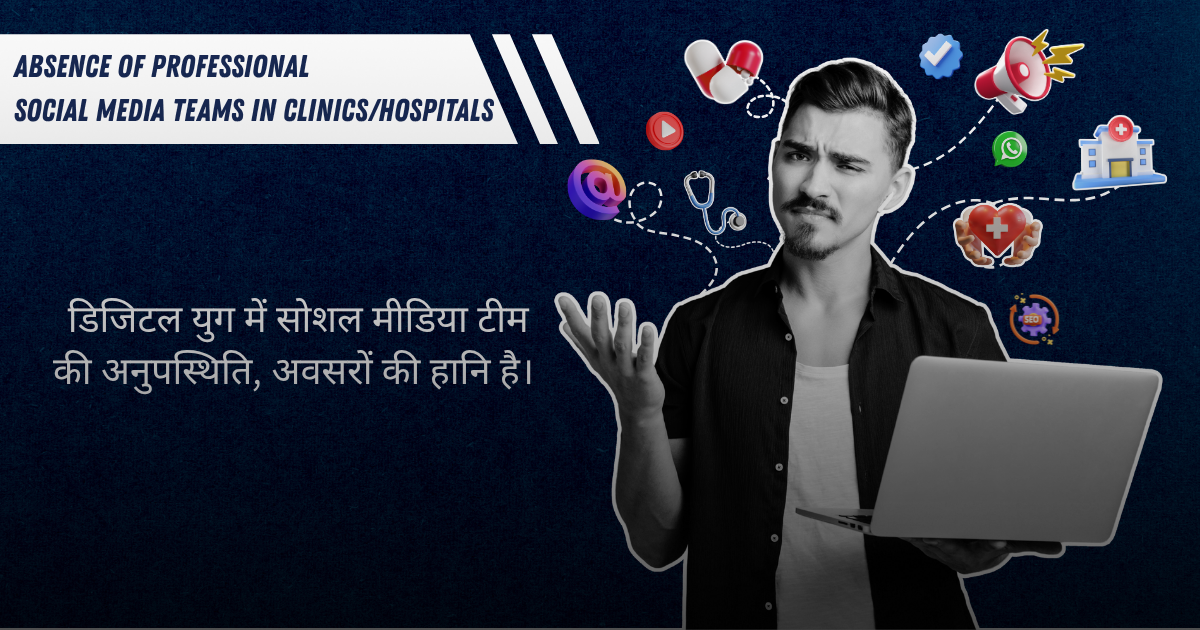
Absence of professional social media teams in clinics/hospitals: Social media has fundamentally changed how the world shares and gets information. Many hospitals and clinics struggle to effectively utilize social media, missing out on opportunities to connect with patients, share important health information, and build trust. This can result in a missed opportunity and a loss of confidence. Having a professional team can help healthcare organizations communicate effectively, share important information, and build strong relationships with patients. In this article, we will discuss this in detail.
Absence of professional social media teams in hospitals
Most people think social media is only for young people. However, this is not the case; healthcare professionals can also benefit from this platform. When it comes to the healthcare social media market, it`s simple to see how it might assist a practice.
Hospitals and clinics often lack a dedicated team to manage their social media presence. This can lead to:
- Missed opportunities to connect with patients:- Hospitals and clinics often miss chances to interact with patients through social media, failing to share important health information, build trust, and respond to concerns. This missed opportunity can impact patient engagement and satisfaction, ultimately affecting the quality of care and relationships with patients.
- Inconsistent messaging and branding:- Inconsistent messaging and branding can be like having a mixed-up identity – it’s hard for patients to know what to expect from a hospital or clinic. Consistent branding is like having a clear signature style – it helps build trust and makes a healthcare organization more relatable and memorable
- Difficulty sharing important health information:-Without a strong social media presence, hospitals and clinics may miss the opportunity to share crucial health information, such as disease prevention tips, health alerts, and wellness advice. So this can leave patients and the community without access to reliable and trustworthy health information, making it harder for them to stay healthy and informed
- Limited engagement and community building:- Hospitals and clinics may struggle to connect with patients and the community, limiting opportunities for meaningful interactions, feedback, and support. This can lead to a lack of trust, loyalty, and advocacy, ultimately affecting patient satisfaction and health outcomes. Digital Direct Rule. To overcome this, hospitals and clinics should prioritize digital engagement by creating interactive content ( polls, quizzes, Q&A sessions), responding promptly to online comments and messages, and sharing patient success stories and testimonials
Challengs of social Media in the hospital
Rules of engagement are ignored or misunderstood, and social media issues are likely to arise. Furthermore, if healthcare professionals don’t grasp the limits they have in a healthcare context vs. running a personal profile, these obstacles become a problem.
Responding to Negative Reviews on Social Media Platforms
Healthcare social media accounts, professional and compliant with the Health Insurance Portability and Accountability Act, keep you out of trouble. People may be upset by a comment made, or they may have been inconvenienced in some manner by your healthcare facility. So that they may leave a poor review or respond angrily to a post.
Time Consuming
Managing social media takes time, and healthcare professionals are already busy. Spending just an hour or two a week might not be enough to see real results. You need to invest time to get the benefits of social media.
Low-quality Information
The fact that the internet is available to everyone is a drawback. And this is because anyone can upload material on whatever subject they wish. The people become self-proclaimed experts and distribute erroneous information without conducting research.
Ignorance of Potential Risks
Absence of professional social media teams in hospitalsAdvanced algorithms on social media cater to their users by supplying them with content they will love.
Lack of Patient Confidentiality and Patient Privacy
When it comes to using social media, professionalism is another problem for many healthcare providers. Confidentiality and privacy of patient information are still just as crucial. So that social media is frequently perceived as less serious, childlike, or even less “respectable”. Healthcare providers face challenges on social media, like maintaining professionalism and protecting patient privacy. To address this, create simple guidelines for your practice to follow, ensuring a respectful and secure online presence
If you have concerns about this, set up social media guidelines for your practice to follow. After
Digital Direct Rule, this company suggests that healthcare organizations should invest in a dedicated social media team that can build trust, share valuable health info, and engage with patients. By doing so, they’ll improve their online presence, build their brand, and create a stronger community
The result of Not Having a Professional Social Media Team
If you do not have a professional social media team can have serious results for healthcare organizations. These include:
- Missed opportunities: Without a dedicated social media team, healthcare organizations may miss opportunities to connect with patients and share important health information.
- Inconsistent messaging: Without a consistent social media presence, healthcare organizations may struggle to build trust and credibility with their audience.
- Limited engagement: A lack of engagement with patients and the wider community can lead to a lack of brand awareness and loyalty.
- Negative online reviews: Without a social media team to monitor and respond to online reviews, healthcare organizations may struggle to address patient concerns and improve patient satisfaction.
A social media team can help healthcare organizations in many ways:
- Create engaging content that patients love:- Creating engaging content means developing social media posts, videos, and stories that patients find interesting, informative, and enjoyable. This can include health tips, patient success stories, behind-the-scenes looks at healthcare teams, Q&A sessions with doctors, and infographics that explain complex health topics in a simple way.
- Build a strong brand that people trust:- Building a strong brand means creating a consistent and recognizable identity for a healthcare organization that patients trust and respect. So this involves developing a unique voice, visual style, and tone that reflects the organization’s values and mission. By establishing a strong brand, healthcare organizations can differentiate themselves, build credibility, and foster loyalty among patients
- Talk to patients and respond to their questions:- Talking to patients and responding to their questions means engaging in two-way communication on social media, where healthcare organizations actively listen to patient concerns, respond promptly to their queries, and provide helpful information. And share important health information that’s accurate and up-to-date
With a professional social media team, healthcare organizations can:
- Build trust and credibility with patients:- By being transparent, responsive, and informative on social media, CarePlus Healthcare can show patients that they genuinely care about their well-being. This can lead to increased patient loyalty. Digital Directive for CarePlus Healthcare: Prioritize transparency, empathy, and responsiveness on social media to build trust
- Providing expert advice and guidance, innovative approaches and solutions. Highlighting their expertise and credentials
- Improve patient engagement and satisfaction:- Improving patient engagement and satisfaction means creating a positive experience for patients through effective communication, personalized care, and timely support. At CarePlus Healthcare, this can be achieved by:
- Respond promptly to patient queries and concerns:-Respond to patient queries and concerns within 2 hours to show patients you care and value their time. This prompt response can be achieved through:
- Providing relevant and accurate health information:- Digital Directive for Healthcare: Provide accurate and up-to-date health information that addresses patient concerns and interests. Ensure content is: reviewed by medical experts, Easy to understand, and Relevant to patient needs
- Educate patients and the community about important health topics:- The community about important health topics by sharing valuable information on disease prevention, healthy lifestyle tips, and the latest medical research.
By having a dedicated social media team, healthcare organizations can make a big impact online and build a stronger connection with patients and the community. They can share valuable information, respond to concerns, and show patients that they care. Digital Directive Rule for Healthcare: Invest in a dedicated social media team to build a strong online presence, engage with patients, and share valuable health information. By doing so, Healthcare can make a big impact online and build a stronger connection with patients and the community
Conclusion
In this article, we discussed the absence of professional social media teams in clinics/hospitals: Social media has fundamentally changed how the world shares and gets information. For more information can visit our website Digital Direct Rule.