

Clinical excellence is the backbone of quality patient care. Focus on translating clinical excellence into engaging content that connects with patients, empowers them, and improves their understanding of healthcare topics. Healthcare professionals strive for precision, compassion, and outcomes that improve lives. Healthcare is about giving patients the best care with skill, kindness, and results that help people get better. But when healthcare providers want to tell people about their services through marketing, it’s hard to make content that’s both accurate about the medical stuff and also interesting and understandable for patients.
Healthcare marketing needs to do two things:
- Be right about the medical stuff.
- Make patients feel connected and understand what’s going on.
Digital direct rule companies help people when they face difficulty. The problems in making medical expertise into interesting content.Ways to fix these problems. How healthcare providers can make content that shows their skills and connects with patients.
What is the difficulty in translating Clinical Excellence into Engaging Content?
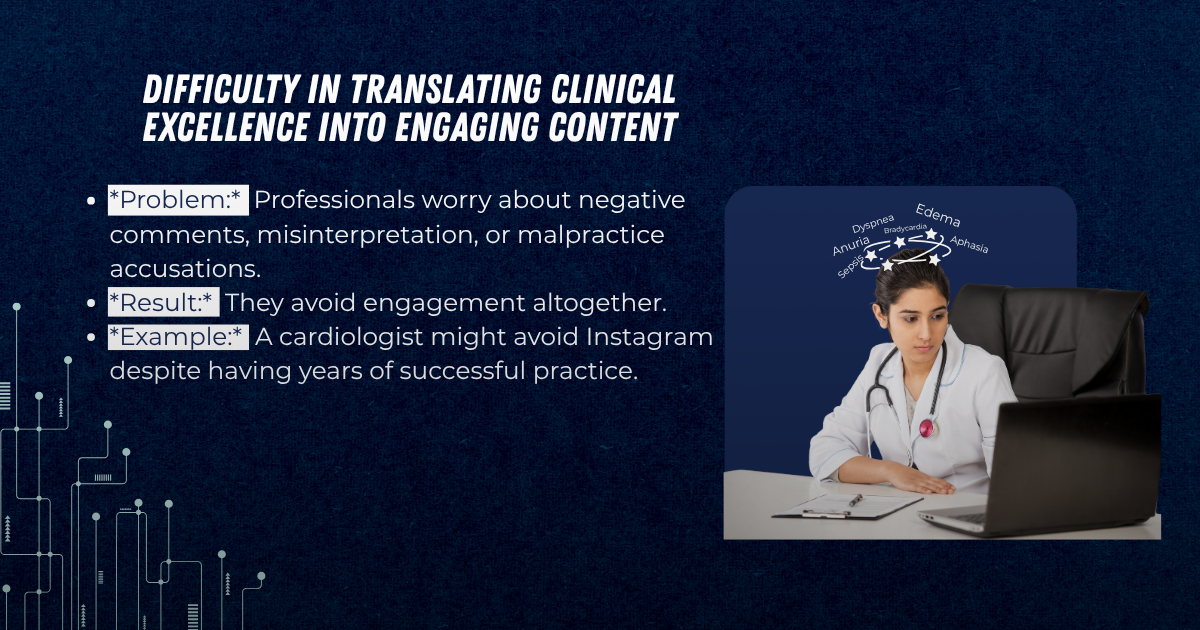
The challenge in translating clinical excellence into engaging content lies in striking a balance between clinical accuracy and patient engagement. Healthcare professionals must ensure that the content is medically accurate and based on evidence, while also making it interesting, understandable, and emotionally engaging for patients. Using too much medical jargon can confuse patients, while oversimplifying might compromise medical accuracy or credibility. Clinical content often focuses on facts, whereas patients tend to connect with stories and emotions.
Some strategies to achieve this balance include:
- Using patient stories to illustrate clinical outcomes in clinical excellence.
- Creating visuals like infographics or videos to explain complex medical information to engaging content.
- Focusing on patient needs and outcomes rather than just clinical details.
- Ensuring content is empathetic and connects with patients on an emotional level.
This balance is tough because:
- In clinical excellence, using too much medical jargon can confuse patients.
- When healthcare providers simplify medical information too much in an attempt to make it more engaging or understandable for patients
- Clinical content often focuses on facts of the medical, while patients connect with stories and emotions.
Making content that’s easy for patients to understand while keeping it medically correct and trustworthy is a big challenge
What does translating clinical excellence into engaging content Mean?
In the medical stakeholders like doctors, hospitals, and labs, these are experts in medical science and knowledge, and patient care, but when it comes to digital presence
- Simplifying complex medical concepts involves breaking down the information into pieces that patients can understand without losing the core medical message. And some ways to do this include using plain language instead of medical jargon, using examples that patients can relate to, creating visuals like diagrams or videos to help explain things, and focusing on what matters most to patients, like outcomes or how it affects them. This approach helps patients grasp important medical information in a way that’s both understandable and relevant to them
- Presenting information in a way that connects with a broader audience means tailoring the content so it’s understandable, relevant, engaging, and accessible. Using language and concepts that most people can grasp, focusing on aspects that matter to the audience, and using methods like storytelling, visuals, or examples to capture interest are key. Making the info easy to find, read, or listen to for people with varying levels of health literacy or tech skills also helps. This approach helps healthcare providers communicate effectively with diverse groups of people.
- Balancing scientific accuracy with emotional engagement means that healthcare providers need to ensure their content is both medically accurate and evidence-based, while also connecting with patients on an emotional level. This involves presenting facts in a way that resonates with people, using storytelling or examples that evoke empathy or interest, and making the information relevant to patients’ experiences or concerns.
- Effective translation of clinical research requires structured communication frameworks—not just simpler language. The most successful women’s health companies develop multi-layered communication models that maintain fidelity to research while creating meaningful connections.
- The “evidence cascade” represents one such framework, where marketing messages link directly to their clinical foundations through a traceable chain of interpretation. This approach allows for simplified consumer-facing messages while maintaining transparency about the research foundation. Each simplified claim maintains a clear lineage to specific research findings.
Why Is It a Challenge?
It’s a challenge to balance scientific accuracy with emotional engagement because:
- Scientific accuracy requires precision: clinics need to be medically correct and based on evidence.
- Emotional engagement needs relatability: Patients connect with content that’s relevant to their experiences, emotions, or concerns.
- These goals can seem at odds: the need to focus too much on scientific details might make content dry, while focusing too much on emotional engagement might compromise accuracy.
- Avoiding oversimplification: Simplifying too much can lose medical accuracy or credibility.
- Using storytelling effectively: Stories can engage patients emotionally while still conveying accurate medical info.
- Understanding patient needs: Knowing what matters to patients helps tailor content for both accuracy and engagement.
- Patient-Centric Messaging: Talk about what matters to patients – their needs, worries, and outcomes.
- Storytelling with Care: Use real patient stories to show how healthcare works in a way patients can relate to.
- Simplify without Dumbing Down: Break down tough medical info into easy-to-understand bits without losing the facts.
- Use Engaging Formats: Use things like videos, pictures, and graphics to make content more interesting and easy to grasp.
- Educate and Empower: Help patients understand their health so they can make better choices.
- Collaborate with Content Experts: Work with people who know how to write about healthcare in a way that’s both accurate and interesting.
Using strategies like patient-centric messaging, storytelling with care, simplifying without dumbing down, engaging formats, educating and empowering patients, and collaborating with content experts helps healthcare providers create effective content. This content is both medically accurate and engaging for patients, helping them understand their health better and feel more in control. By focusing on what matters to patients and presenting info in an understandable and relatable way, healthcare providers can connect with their audience more effectively. This approach bridges the gap between clinical excellence and patient engagement.
Conclusion
In this article, we discussed that Clinical excellence is the backbone of quality patient care. Healthcare professionals strive for precision, compassion, and outcomes that improve lives. Healthcare is about giving patients the best care with skill, kindness, and results that help people get better. Balancing scientific accuracy with emotional engagement means that healthcare providers need to ensure their content is both medically accurate and evidence-based, while also connecting with patients on an emotional level. For more information, you can visit our website, Digital Direct Rule.