
Categories
Medical

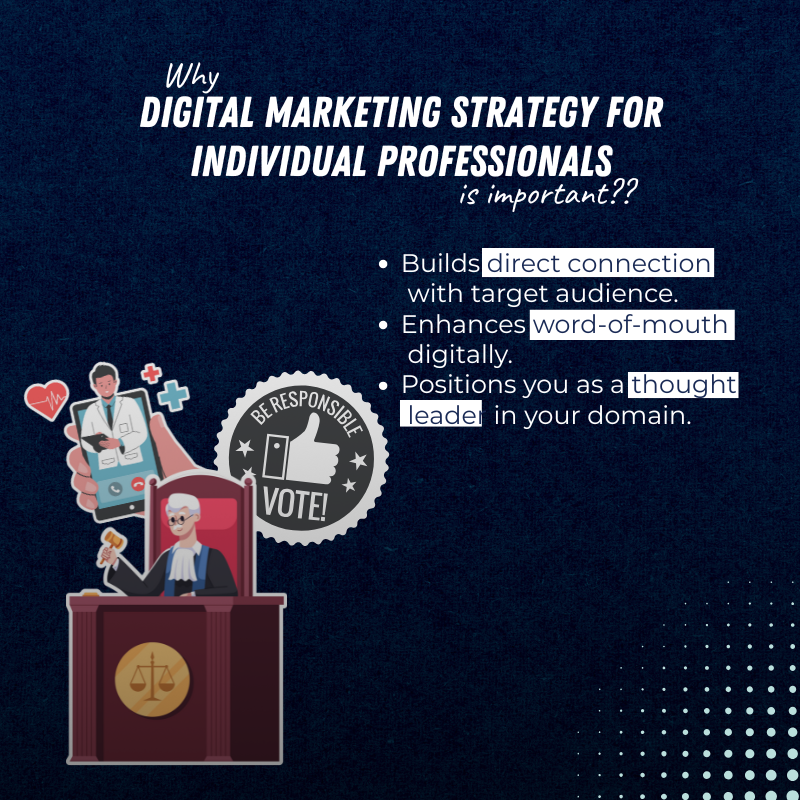
Digital marketing strategy for individual professionals

Digital marketing strategy for individual professionals, digital technology is transforming industry after industry, and it is professional services are no exceptions. A digital marketing strategy is a plan for using digital marketing tools and techniques to achieve a firm’s strategic marketing objectives, such as brand building or new business development. It is about crafting a thoughtful, comprehensive plan that considers your audience, goals, competition, and the unique attributes of each digital channel. In this article, we will discuss how to create a digital marketing strategy, what the most effective digital marketing strategies and why you need a digital marketing strategy in detail.

Digital marketing strategy
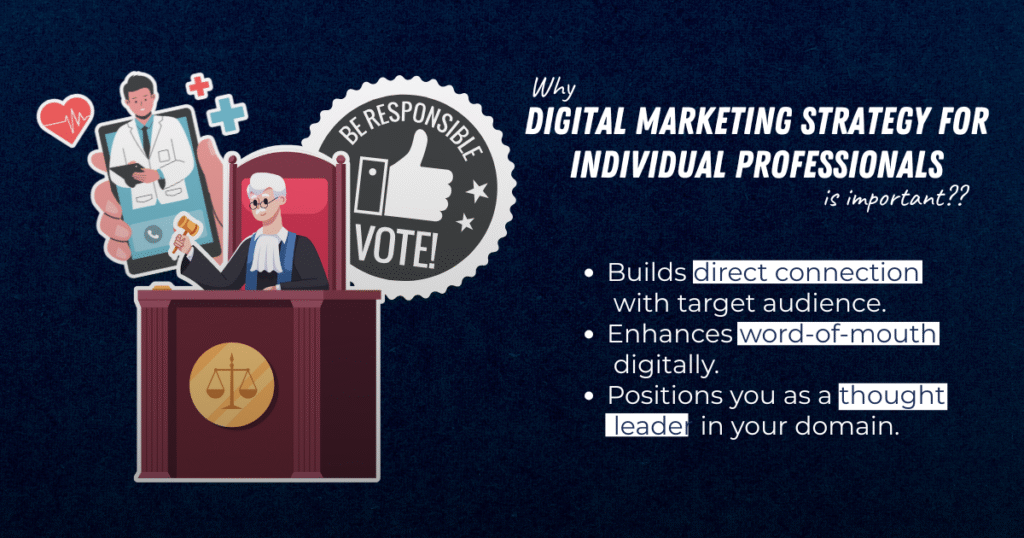
Digital marketing strategy is a high-level marketing plan. And strategy choices that set the direction for positioning your firm in the marketplace and the key message you will deliver to your audiences. The high-level strategy should be the same in both the digital and office worlds.

This is a part of the bigger marketing plan that uses both online and offline methods. It includes techniques like getting found on search engines, running online ads, sending emails, doing webinars using social media, having a website, creating podcasts, and using mobile apps. These online tools help reach people and promote things, and connect with the audience.c

In digital marketing, people mostly talk about strategy and techniques like they are the same thing. But for professional services like consulting, law, or healthcare, there`s a difference. Strategy is the overall plan to reach goals. And the techniques are the specific ways used to carry out the strategy.

How to Create a Digital Marketing Strategy

In the modern, intent-driven world it is having a digital marketing strategy is no longer a luxury, but s necessity. Digital marketing is not just about throwing content into the online world and hoping it sticks. Now, how to create a digital marketing strategy:-

1. Identify your audience

The first step in creating a digital marketing strategy is identifying and understanding your audience. This involves defining the characteristics of the people most likely to be interested in your product or service. In this, you can use demographic data like age, gender, location, and income. But it is also important to get your audience`s habits, interests, and the problems that you need to solve.

2. Define your Goals and objectives

This is the next step that clearly defines what you should achieve with your digital marketing strategy. It is important to set SMART goals: specific, measurable, achievable, relevant, and time-bound. Your goals should align with your overall business objectives and the goals. For example, an e-commerce painting store may have the goal of increasing website traffic by 50% in the next six months through SEO and content marketing.

3. Evaluate your Competitors

A thorough competitor analysis allows you to understand your industry landscape, identify key trends, and recognize opportunities to differentiate your business. Look at how your competitors position themselves, their pricing, their pricing, their marketing strategies, and the customer experiences they provide.

4. Determine Your Digital Marketing Channels

The Digital Marketing channels you choose to use It should depend on your audience and your goals. These could include search engine optimization (SEO), pay-per-click advertising (PPC), email marketing, social media marketing, content marketing, and more. Each channel offers different advantages and requires a different approach in the digital marketing strategy.

What are the Most Effective Digital marketing strategies?

The digital marketing strategies you use will depend on the needs and goals of your business: For example, to grow leads or build brand awareness.

  • Content Marketing

There are many ways of generating leads, but one tried and tested method is by providing valuable content and using digital channels to promote it. Put some energy into creating a valuable e-book, or look at hosting a webinar with in-house staff or experts to drive leads and engagement.

  • Social Media Marketing

Social media marketing is an effective way to reach and influence 4.6 billion people across the globe. Plus, depending on the network, social media has such reach that you can target specific age groups and locations. And this allows you to have meaningful engagement with prospects or customers and create brand advocates, who will promote your brand without being asked.

  • SEO

Search Engine Optimization (SEO) is an important digital marketing strategy. The goal of SEO is to optimize your content – whether that’s a homepage, landing page, or blog – so it gets found easily by existing and prospective customers. But there are a few key elements of SEO to tap into user intent that you should consider: Keywords, Backlinks, Links, Meta Descriptions, and Images.

  • Influencer Marketing

It is working with influencers it can help you to reach a specific group of people who are interested in what you offer. By partnering with an influencer who fits your brand and has followers interested in your product or service.

  • Email Marketing

Email marketing is one of the oldest forms of digital marketing because it works despite the demise of third-party cookies and privacy concerns. It is becoming a bigger concern for customers, as email marketing roles that have shown an interest in their service.

Why Individual Professionals Need a Digital Marketing Strategy

A digital marketing strategy for individual professionals is a plan that uses online tools and methods to:

  • Promote their services:
    They promote their expertise and offerings online. Individual pros use digital marketing to show off their skills, share their services, get clients, and get noticed online. They highlight what they’re good at, talk about what they offer, and get people interested. When promoting stuff online, they gotta follow rules like saying if the content is sponsored. Digital Direct Rule company will help you promote your services.
  • Connect with potential clients: Connecting with potential clients for professionals like lawyers, doctors, or governance experts means using digital marketing to reach people who might need their services. Through these online channels, these professionals can share their expertise, highlight their services, and engage with potential clients. When doing this, they must comply with Digital Direct Rule guidelines, like disclosing sponsored content, and also follow industry-specific regulations. Target audiences interested in their work.
  • Build their professional brand:
    Establish an online presence. Building their professional means creating and promoting a strong online identity that showcases their expertise, values, and the service. You should connect with the potential client and differentiate yourself. When building their brand online. They need to comply with Digital Direct Rule guidelines and specific rules.

Conclusion

In this article, we discussed the Digital marketing strategy for individual professionals. It is changing the way professional services firms go to market with digital technology. It is transforming industry after industry, and it is professional services are no exceptions. For more information, you can visit our website, Digital Direct Rule Company. Digital Direct Rule company or its founder Jyoti Rani Mistri, it’s challenging to define its role in promoting law, medical, or governance professionals.
Categories
Medical

Social media marketing for hospitals

In the digital age, social media marketing for hospitals is an important tool. It is crucial for hospitals seeking to connect with patients, establish their brand, and remain competitive in the healthcare landscape. Healthcare is a crowded field. To get new patients, you need a strong digital marketing plan. Significant changes have occurred in healthcare due to mergers, acquisitions, and updates in health insurance. One way to get patients is by using social media. In this article, we will discuss these tried-and-tested strategies for effective healthcare social media marketing with examples from leading healthcare companies in detail.

Social media marketing

Using social media to attract customers is one method. Social media for hospitals and healthcare providers talk directly to potential patients and give helpful information. So patients can make good healthcare choices. And here are some reasons why hospitals need to continue improving their social media marketing strategies:

  • Establishing Patient Connections:-

We all know Social media helps hospitals connect with patients and build a community and trust. That`s why hospitals can use social media to talk to people they already serve and people who might need their help.

  • Recruitment and Retention of Healthcare Professionals:-

It can use social media to recruit to retain, and attract. Keeping good healthcare professionals is about finding the right people and making sure they’re happy working there. Healthcare places need skilled people to give great care.

  • Engaging a Targeted Audience:-

Healthcare brands can use social media and other targeted marketing strategies to engage with specific demographics and patient groups. And by understanding the unique needs, preferences, and concerns of different age groups or patient conditions, healthcare brands can tailor their messaging. This targeted approach helps in building stronger connections with these groups, improving communication, and making healthcare services more relevant and accessible to the patients who need them.

  • Timely Interaction and Customer Service:

Hospitals can use social media platforms to talk to patients, answer their questions, and fix problems fast. And these platforms help hospitals do a better job with customer service and make patients happier.

  • Community Engagement

Social media tells people about fundraising events and things they’re doing to raise money. By sharing what’s going on, asking for input, or getting people to participate in events, healthcare groups connect with the community. Social media helps build relationships between healthcare groups and the people they serve, making the community more supportive.

Importance Of Social Media In Healthcare

Medical knowledge used to be the currency of professionals. Before, only doctors and nurses had a lot of medical knowledge. People had few options aside from asking them for health advice. Now, there are tons of information online, and most people get medical advice from online searches and social networks.

Social media plays a significant role in healthcare by enabling healthcare providers like hospitals and clinics to connect with patients. Healthcare groups use digital tools like social media to share health info, promote services, and build their brand. It lets them connect directly with patients, manage their online reputation, teach patients stuff, and reach out to the community. Digital tools help healthcare groups stay connected with folks, answer concerns fast, and share important health updates.

Digital Direct Rule Company plays a role in helping healthcare organizations manage their digital marketing efforts, including social media strategies, to effectively reach and engage their target audience.

  • A healthcare facility or hospital can also use a social media strategy to promote events, research, treatments, and other services.
  • Patient care support refers to the assistance and services provided to patients to help them manage their health, treatment, and overall well-being. This can include emotional support, educational resources, help navigating the healthcare system, and other services aimed at improving the patient’s experience and outcomes.
  • Using marketing strategies that give you the best results for the money you spend is smart. In healthcare, cost-effective marketing helps organizations reach patients, promote services, and build their brand without breaking the bank. Social media can be a super cost-effective way to market healthcare services. Cost-effective marketing helps healthcare groups connect with people they care about.
  • The goal is to attract patients, build awareness of the services offered, and establish the organization as a trusted provider of healthcare. Promotion can be done through various channels like social media, websites, print materials, and community events. Effective promotion in healthcare balances informing the public about services with ensuring that messaging is accurate, respectful of patient privacy, and compliant with healthcare regulations.

Top 5 Hospital Social Media Marketing Strategies

  • Conduct A/B Tests with Your Content:-

A/B Testing is a way to compare how well different ways of communicating work. You can use this method to test different words and hashtags. Healthcare marketers can also try out different graphics, videos, and images. When you find out what works best, make sure to use it in your plan. But trying things out and making changes are important for making content that people really like.

  • Provide Trustworthy Healthcare Content

You can build trust with your audience and help people know more about healthcare by regularly sharing educational content. This makes your organization seem like a trusted and knowledgeable source of healthcare information. Digital Direct Rule is known for sharing healthcare content on social networks that doctors check for accuracy. These posts talk about common health topics when posted on Facebook or YouTube. By sharing factual health info from trusted people, we help with common healthcare concerns and build trust with the people following them by teaching and telling them things.

  • Optimize for SEO Through Social Media

Search engine optimization (SEO) helps you get seen more online. Make sure your social media profiles and the things you share are set up to be found easily. And post things that people like regularly, answer patient questions fast, and keep your business info correct across all your online profiles.

  • Focus on the Patient Experience:

Social media helps healthcare groups to show what it’s like to be a patient there. A YouTube channel is a great way to share these stories about patients’ experiences. By sharing stories from patients and showing how staff care for people, healthcare groups can build trust.

  • Remain Compliant

It is very important when using social media for healthcare. This helps make sure you don’t post things that are wrong or not right on your healthcare social media. If you’re not sure about something, talk to people who know about law or following rules, so you don’t post private information or big announcements that are not okay.

Conclusion

In this article, we discussed that in the digital age, social media marketing for hospitals is an important tool. It is crucial for hospitals seeking to connect with patients, establish their brand, and remain competitive in the healthcare landscape. These tried-and-tested strategies for effective healthcare social media marketing with examples from leading healthcare companies. For more information, you can visit our website, Digital Direct Rule.

Categories
Medical

Online promotion for doctors

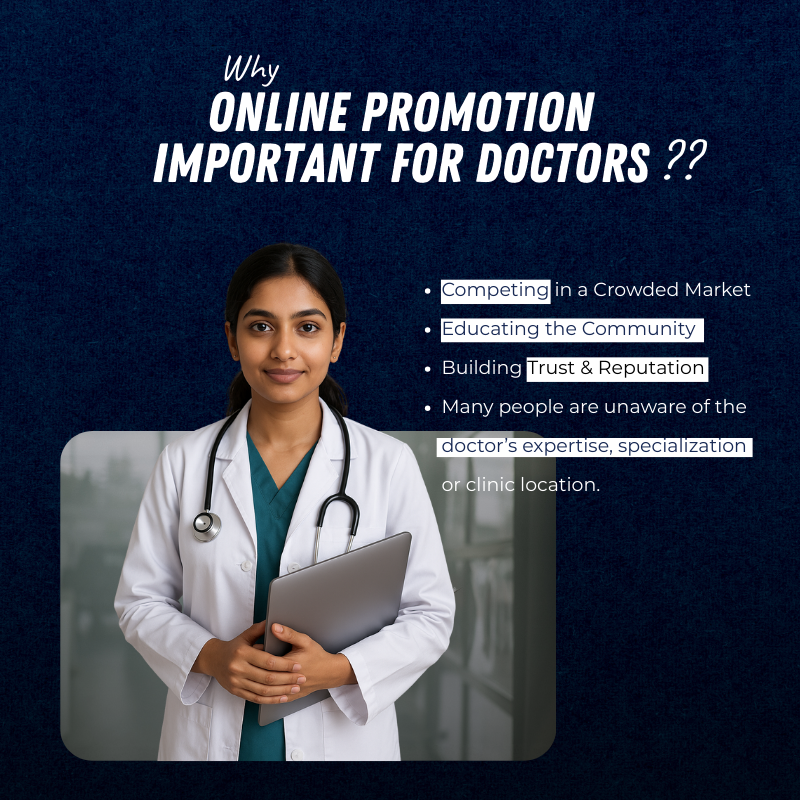
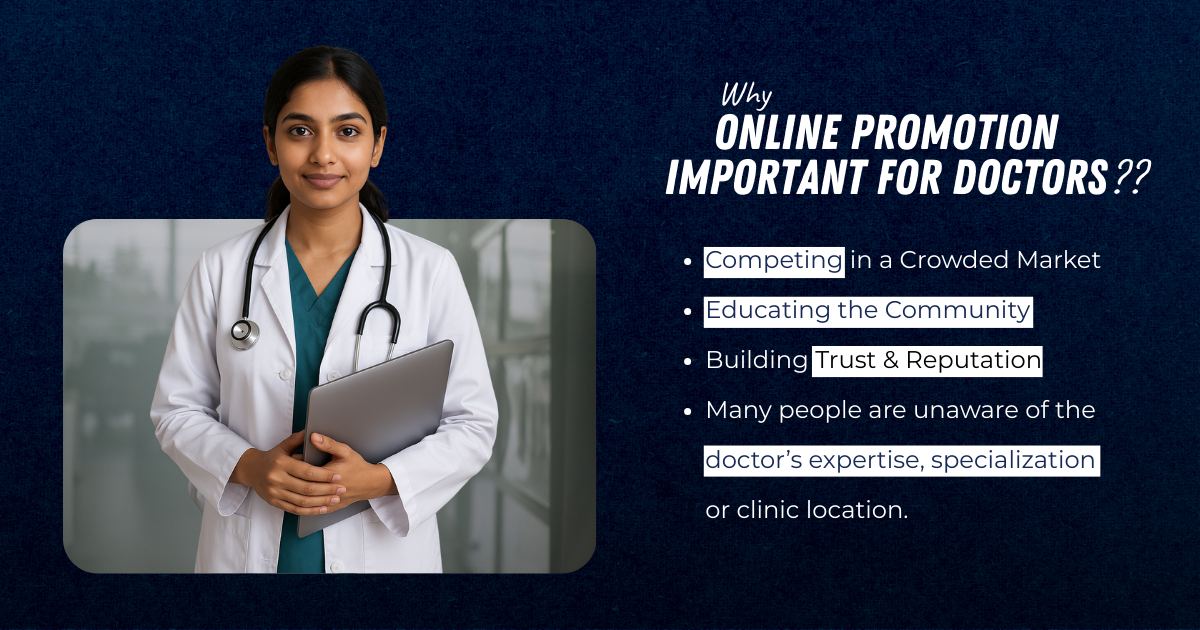
In today’s digital world, a strong online presence is essential for any healthcare provider. More patients are using the internet to find doctors, making online marketing important for building trust, attracting new patients, and growing your practice. And online promotion for a doctor can be overwhelming. There is much different information out there. It is hard to know where to start or where not to. In this article, we will discuss the topic in full detail.

Why online promotion for doctors?

Online promotion for doctors involves various strategies to enhance visibility, credibility, and patient engagement.

Build Trust and Authority: This Digital Time For doctors, online promotion helps position them as trusted experts through a professional website, social media, and helpful content. This builds trust with patients and shows people you’re a knowledgeable and caring doctor.

Increase Visibility: Our SEO strategies help to rank high on search engines like Google, so patients can find you easily. This means when patients search for stuff like “doctor near me” or “best doctor,” they can find you easily.

Attract New Patients: Targeted ads, social media, and local SEO strategies help connect docs with their audience and potential patients. These tools let you reach people who need your care, engage with them where they are online, and show up when they’re searching locally.

Engage patients: Engaging patients helps you connect with people through consistent communication and easy-to-use platforms. This means patients feel connected to you and your practice. They get the information they need, can ask questions. This builds a relationship between you and your patients.

Showcases expertise: Sharing this expertise online helps patients understand what you do, builds trust in your skills, and shows people the care you provide. So, Patients get to see what you’re about and how you help people. Doctors can share health information the treatments, and success stories online.

Stay competitive: In this Digital Era, Many patients choose doctors with a good online presence because they trust them. And in a crowded field, docs with a strong online presence stand out. So, having a solid online presence helps patients trust you more and choose you over others.

What is the Benefit of online promotion for a doctor

Digital Direct Rule conducted a study and found that 52% of consumers search online for information about treatment options or generally to learn about health concerns and the care providers. And that`s why the online promotion is an effective tactic to utilize in branding and advertising of the hospitals and to build their online presence.

There are many benefits of healthcare in the relationship between doctors, hospitals, and clinics in India.

1. Improve Audience Reach And Service Awareness

If you want to get your services in front of more people who need them. And want to collect a healthy flow of customers, it is important that you spread awareness of the services you provide to your audience. And They Choose to make their appointment online or by calling after selecting a doctor from the website, before visiting the premises. Digital Direct Rule Company is best suited to improve. We use online tools to get your services in front of more people who need them and let people know what you offer and how you can help.

2. Easy to get Access to the Patients

Doctors can connect with people who straightforwardly need care. It makes it simpler for patients to find you and for you to connect with them. Having a website and a social media page it is helps in providing patients easier access to the healthcare providers and saves them from unnecessary service research.

3. Market Your Brand

The Social media platforms are excellent cost cost-effective marketing tools that send out information to thousands of people who are online. Online promotion is very important for all kinds of businesses, including medical practices. This is a relatively recent strategy, but an effective one.

4. Customizable Marketing Strategy

The benefit of the online promotion of the doctor’s website for hospitals is that you can customize it as per your needs. There are many tools and formats that you can use to market your service. So, Content marketing is the best option for maintaining a strong online presence and keeping the audience well-informed about your service and hospital.

Good SEO benefits

SEO is not just for the hospital at large. For Online promotion for doctors, there are many patients searching for local practices online, and these searches eventually lead to a potential patient. And Local SEO, or optimizing your website for local SEO search results, can also be a valuable digital marketing tactic for practices that operate in specific geographic locations for doctors.

Simple Steps for Marketing Your Medical Practice Effectively

To make medical practice effective, you need to know some strategies. And the strategy, for online promotion, docs need to find folks most likely to become patients. This means targeting the right audience online. Digital ads help get in front of these people. Patient testimonials and reviews are super helpful – they show real experiences with you. This builds trust with potential patients.

  • Incredibly effective ways to get new patients from online medical marketing. And this is because your success depends on your ability to create a website that easily introduces your medical practice to prospective patients, which gives educational content to the patients that captivates your audience; Like use social media as a patient generation tool.
  • Build a pro website:- You need to show your credentials and experience. Make it easy for people to contact you or book an appointment, and share helpful health info or blog posts
  • Use social media: – You should post about health tips, news, or updates in your field, engage with patients, answer questions, or share experiences, build a community around your practice, and show the human side of your practice
  • Get online reviews: – We all know the effect of the reviews. Reviews help potential patients trust you more because they show what people like about you. It also boosts your practice’s visibility online. Plus, they let you see what you’re doing great and where you can improve.
  • Targeted digital ads: – These ads get your practice in front of people searching for services you offer, helping you connect with potential patients in your area. This can boost appointments and grow your practice by focusing on people most likely to need your services.

Social Media marketing can maximize your patient outreach

Social media is one of the most powerful online marketing tools out there. It is the ability to put you directly in front of the past, present, and future of the patients. And this is the main reason that alone to embrace this massive platform alone.

  • Facebook Impacted the Healthcare Industry:- Facebook and the healthcare industry have become one. So, Consumers concerned about their healthcare have turned to social media for two reasons. And the reasons are:-
  1. To express their health issues
  2. To find advice from the practitioners for various medical services.
  • Google Ads, You can still use Google Ads to promote your practice by sharing health tips and helpful info. And this way, you’re indirectly letting people know about your expertise and services while providing value. By sharing useful health info, you connect with potential patients and show you’re a trusted doctor.
  • Informative Videos for doctors

To grab the attention of the patients and others by sharing the Videos that are full of information. And creative images and posters, and the creative team can make nice videos for the doctors, clinics, and the hospital.

For the doctors who want to grow their patients. It is based on and expands their reach. Contact Digital Direct Rule today. We are one of the best healthcare digital marketing agencies in India. That helps you create a customized digital marketing plan for the online promotion.

Conclusion

In this article, we discussed Online promotion for doctors that In today’s digital world, a strong online presence is essential for any healthcare provider. More patients are using the internet to find doctors, making online marketing important for building trust, attracting new patients, and growing your practice. And doctors need to market themselves, and digital Marketing for doctors is the best medium for that. And if you have any questions, you can ask. So if you want to know more, you can visit our website, Digital Direct Rule.

Categories
Medical

SEO for doctors in India

Nowadays, being online is very important for doctors. Patients are searching online for doctors, so doctors should update how they market themselves. SEO for doctors is an imperative way to attract new patients to a medical practice that is looking forward to expanding its business. In this article, we will discuss this in detail.

SEO for doctors

SEO for Doctors in India

SEO (Search Engine Optimization) helps to promote your business in this digital era. Because there is much competition in every field. It has helped lots of businesses grow over the past few years. For doctors isn’t just about getting to the top of search results. It’s about reaching people who need your services. Whether you’re a solo doctor or part of a big medical group, good SEO strategies can help your practice. And most patients look for doctors online. About 3 out of 4 patients search and compare doctors online. This means lots of people choose and trust doctors based on what they see online. Trust is very important to connect with people. When your website shows up high in search results.

With lots of competition in 2025, doctors need to use the newest SEO techniques to stay ahead. In this guide, we’ll look at how SEO works for doctors, helping you get better visibility online. So when online presence plays a significant role, SEO for doctors has become exceedingly crucial to boost your search rankings and increase visibility.

Digital marketing is important, and it begins with the doctor SEO journey. It is the answer for doctors, and it starts with SEO. A website that’s optimized for search helps you show up online, get visitors, get more patients, and stand out from others. In the big healthcare industry, you need to show yourself to people looking for healthcare.

Why SEO Matters for Doctors

SEO is important for building credibility. reaching patients and growing a business. Specifically, SEO is more than just a marketing tactic for doctors and healthcare professionals in the following ways:

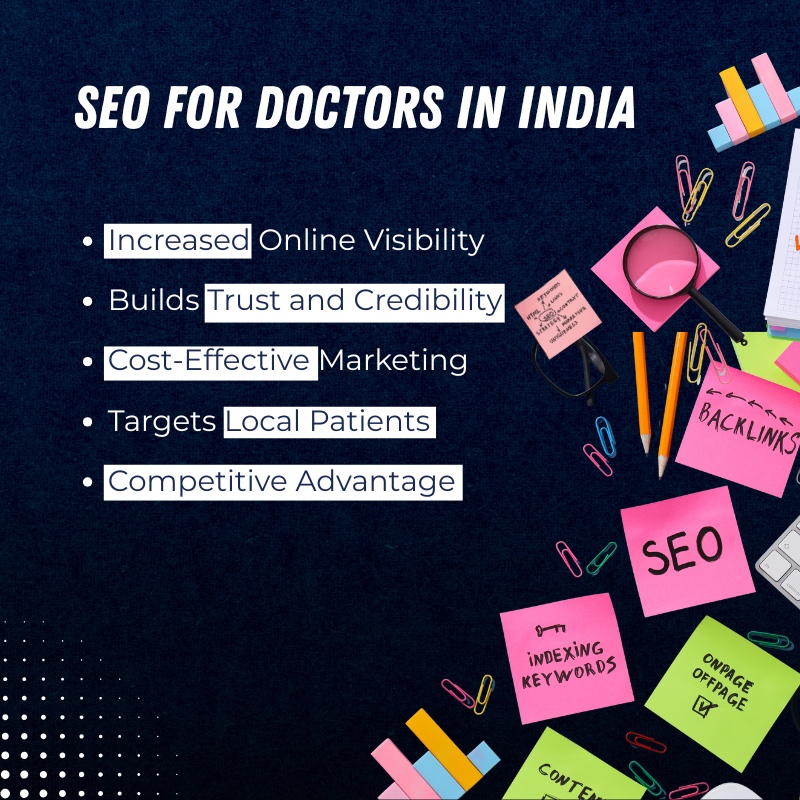
1. Increased Online Visibility

With good SEO, patients can find you easily online. When someone searches for things like “best gastrologist near me” or “pediatrician in Jaipur,” your website will show up at the top of the results. And this helps patients find you when they’re looking for services you offer.

2. Builds Trust and Credibility

Trust is very important to connect with people. When your website shows up high in search results, patients trust you more and see you as reliable. Then people will trust you. If your practice is at the top of searches, it looks professional and dependable. Then you can collect the leads.

3. Targets Local Patients

With Local SEO, people nearby can find you easily. Patients can search for services in your area. Because they know your work, but they don’t know your area, and local SEO helps in this to reach people to you. Your medical practice shows up when people in your area search for services you offer. This helps patients in your area find and contact you easily.

4. Providing Valuable Health Information

Most of the person would like to read about health information on their phone or laptop, then you can give them the information through blogs. By creating content like blog posts, FAQs, or guides on health topics, doctors can show their expertise. This helps patients trust them more and can lead to a loyal following. But when this content is optimized for search engines (SEO), it’s more likely to show up when patients search for those health topics online.

5. Drive Traffic to Website and Cost-Effective Marketing

Most of the patients look up healthcare information online before booking an appointment. Because everyone wants to know about the doctor they want to go to for treatment. They research symptoms or search for the best doctor in a specialty. Good SEO helps attract patients looking for specific treatments or experts.

6. Competitive Advantage

First of all, you need to know about the doctors near you because they are your competitors. Just having a website isn’t enough to stand out in this digital era. Good SEO strategies help you outrank other local doctors in searches. And this is showing up above competitors in searches means you’re seen by patients more often. It is important in busy areas or if lots of doctors, then you should offer the same services. SEO helps you highlight what makes you special compared to others in this time.

Key Elements of SEO for Medical Practices

1. Keyword Research and Optimization

Keyword research is important for ranking. It finds what patients search for when looking for doctors like you. Using those words on your website helps it show up in searches. Like if you’re aGestrologist in Vadhodra,” using that on your site helps patients find you. Doing this right makes your site show up more in searches, getting you more patients.

2. Local SEO for a Doctor

Local SEO is super important for doctors, depending on their specialty, because people often search for doctors nearby. To get more visibility in these local searches, you should get and optimize your Google My Business listing, make sure your Name, Address, and Phone number are consistent everywhere online, ask patients to leave reviews on Google and other sites, and create location-specific pages if needed.

3. Content Creation and Optimization

Content creation is very important, and optimization for a doctor’s website means making useful info like blog posts or guides about health topics in your specialty, and making this content show up better in search results. This helps show your expertise, helps patients find information on health topics, and attracts more patients through search engines. and your specialty.

4. Website Structure and Technical SEO

Website structure and technical SEO for a doctor’s website means making sure the site is easy for search engines like Google to understand and for patients to use. Technical SEO helps search engines crawl and rank your site better, making it more likely patients will find you online when searching for services you offer.

5. Link Building for Medical Practices

Link building is a trust because if you are posting content on other websites, or they feel connected with you, then this is the best key to your website. For medical practices means getting other trustworthy websites to link to your doctor’s website. This helps boost your site’s credibility and ranking in search engines like Google. And good link building can increase your site’s visibility in searches, helping more patients find you online, and this is a good thing for your website or career in the digital era.

How do we perform SEO For Doctors?

SEO helps to promote your business in this digital era. Because there is much competition in every field. It has helped lots of businesses grow over the past few years. And Healthcare isn’t different! Digital Direct Rule Agency that does SEO for doctors can help you get more visible online. This means more people call you, fill out forms on your site, book consultations, and you end up making more money. So we can say that Companies like Digital Direct Rule operate this profession differently.

Conclusion

In this article, SEO for Doctors in India, we discussed the your skills and experience as a doctor should reach more people. And a strong online presence helps patients find you and builds trust before they visit. So we can say to do this: optimize your Google profile, make a mobile-friendly website with helpful content, use local keywords like your city or area, ask patients to leave reviews, and check progress and update your website often. So doing these things helps you become the top choice in your area, get more patients, and build a strong online reputation. And if you want help growing fast, you can reach out to Digital Direct Rule, a digital marketing agency for doctors. So for more information, you can visit our website https://digitaldirectrule.com/.

Categories
Medical

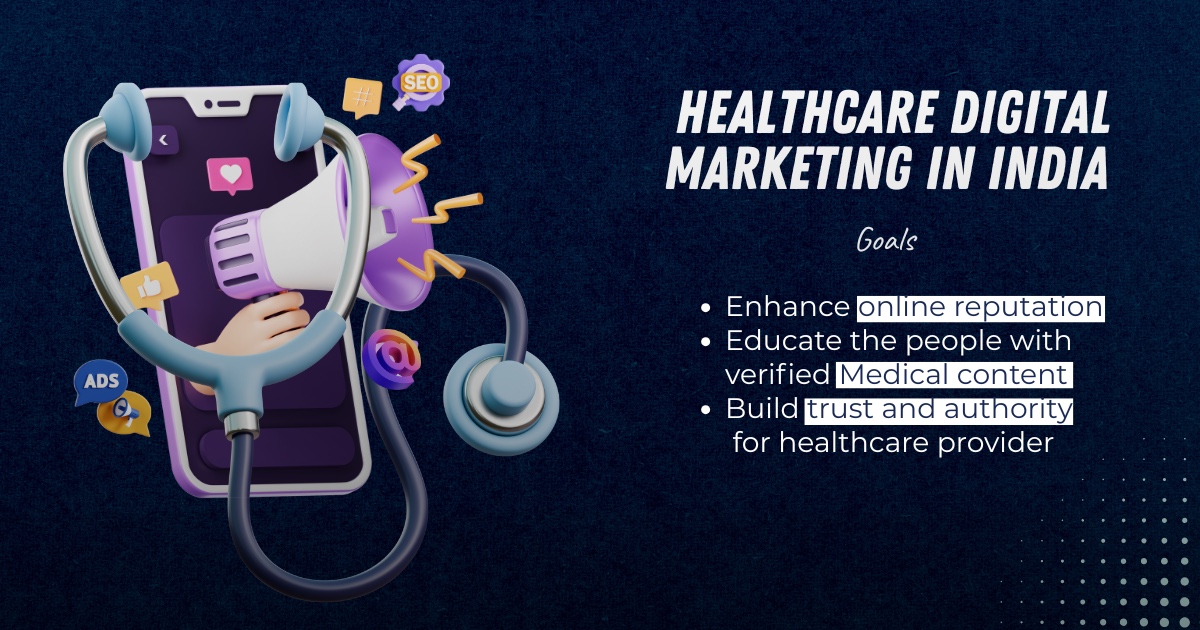
Healthcare digital marketing in India

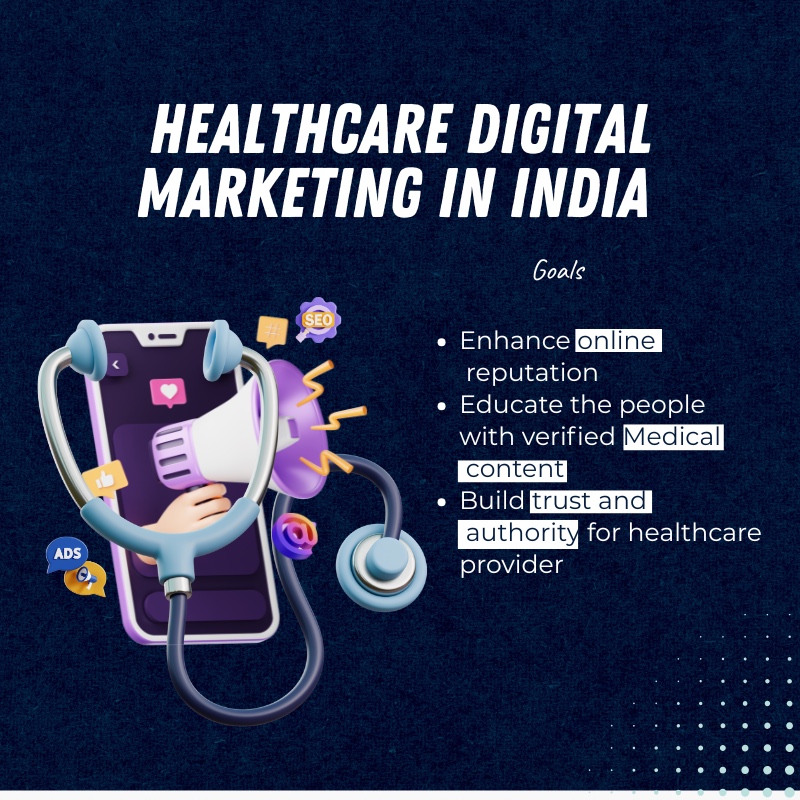
Healthcare Digital Marketing in India: We offer a comprehensive growth solution for the healthcare industry. This involves utilizing digital channels to expand the reach and promote healthcare professionals, hospitals, and clinics. The Five Ps of marketing for the healthcare profession: product, price, place, promotion, and people – To provide a framework for healthcare professionals to implement their marketing efforts. In this article, we will discuss this in detail.

Digital Marketing Service For Healthcare

Digital Direct Rule We’re a trusted agency that helps healthcare businesses like doctors, clinics, hospitals, and pharma brands grow online in India. We’re top healthcare marketers in Lucknow. We use smart strategies to get real results like:

  • Getting more patients through Google and Facebook ads.
  • Making your business more visible locally with SEO.
  • Building your online reputation.
  • Creating simple and fast websites that get appointments.
  • Helping with WhatsApp marketing and content that connects with patients.

We focus on building trust and getting the right audience that turns into patients.

Healthcare Digital Marketing

  • Digital Marketing for Doctors, Clinics, Hospitals
  • Social Media Marketing for Healthcare
  • SEO for Hospital Website
  • Meta Ads for healthcare
  • Google Ads for healthcare

Seo For Healthcare in India

Our Digital Marketing Agency in India helps healthcare practices get more visible online and attract more patients. We use advanced SEO techniques to boost your healthcare company’s online presence. This helps your company get more leads.

Our digital marketing services help you:

  • Build strong brand awareness.
  • Get more people to visit your website.
  • Get more patient inquiries for your practice

Our services include:

  • Researching keywords and markets.
  • Checking your website for SEO issues.
  • Improving your website’s pages for search engines.
  • Building links to boost your site.
  • Creating content to help with marketing.
  • Fixing Google penalties, if any.
  • Making infographics and interactive content.
  • Doing PR in a way that’s customized for you.
  • Reporting and analyzing results.

Meta Ads for healthcare

Meta Ads help healthcare businesses like clinics and hospitals find patients on Facebook and Instagram. They target people based on where they live, what they’re interested in, and what they do online. Meta Ads ensure your healthcare services are visible to people who need them most.

Key Benefits

  • Targeted Reach: Find patients who need your services.
  • Cost-Efficient: Often cheaper leads than Google Ads for some healthcare services.
  • Builds Trust: Shows your practice to people repeatedly, making them trust you.
  • Tracks Results: You can see how well your ads work.

Ad Types

  • Lead Form Ads: Get patient info without them visiting your site.
  • Video Ads: Teach people about your services.
  • Carousel Ads: Show multiple services.
  • Retargeting Ads: Reach people who didn’t book yet.

Social Media Marketing for Healthcare

Social media Management Agency for Healthcare Companies in India helps to give services that support connectivity between your healthcare Company and the Social media has changed the way we communicate and interact with each other. Leading social media websites such as Google, Facebook, Instagram, Twitter, Pinterest, and more use sophisticated technologies to enable users to communicate with each other in real-time. As a result, users can now share data, text, audio, video, as well as comments with one another, as and when they desire. We use these platforms to attract clients to your business through our Healthcare Marketing Agency in India.

We manage your social media to:

  • Make your reputation better.
  • Get more bookings.
  • Build a community of people interested in your services.
  • Make more people aware of your healthcare company.
  • Plan campaigns to reach your goals.
  • Understand your audience better by analyzing data.

Content Curation for healthcare:

Healthcare content writing is highly nuanced. It entails lucidly explaining complex medical information to patients in a manner they can best understand.

Healthcare content curation means picking, organizing, and sharing healthcare information to help people make smart choices about their health. It’s about building trust with patients by giving them useful and true information.

Why Content Writing Matters

  1. Builds Trust: Trust is super important in healthcare. Good content curation helps doctors, hospitals, and marketers build trust with patients.
  2. Empowers Patients: By sharing accurate and helpful info, patients can make better decisions about their health.
  3. Helps Healthcare Pros: Doctors can show they’re experts in their field. Hospitals can connect better with patients. Marketers can navigate healthcare content carefully.

The benefits of Healthcare Marketing?

Healthcare marketing helps healthcare businesses like hospitals connect with patients, keep them engaged, and grow. It uses online and offline strategies to reach patients in a smart way.

Benefits of Healthcare Marketing

  • Find Right Patients: Find patients that fit your business goals, like getting a good mix of patients with good insurance.
  • Stand Out: Get an edge over others in a competitive market to attract patients.
  • Keep Patients Engaged: Connect with patients in a personal way at the right time.
  • Keep Patients Loyal: Make patients stay with your healthcare business long-term.
  • Get More Leads and Money: Get more good leads that bring in money.
  • Reach Patients Everywhere: Connect with patients on lots of different platforms.
  • Use Data to Get Better: Use data to see how things are going and make strategy changes.

Why Healthcare Marketing is Important

A recent study shows that patients are busy with lots of information about their lives and work-related issues, requirements, solutions, and healthcare. They expect healthcare providers to be as good as other companies they deal with.

Most people trust online info and what friends/family say when looking for healthcare info. So, healthcare providers need a good marketing strategy to make sure people find them when searching online for medical care on the internet.

Digital Marketing for a healthcare practice involves communicating with patients, building trust, and encouraging engagement with your services. It helps connect with more patients, nurture relationships to make them loyal, and ultimately leads to a thriving practice. Successful healthcare marketing means successful patients engage more with your practice, leading to growth.

Which platform is the best for digital marketing in India?

HubSpot.
Mailchimp.
LinkedIn Ads.
Instagram Ads.
Twitter Ads.
YouTube Ads (Google Ads Integration)
Salesforce Marketing Cloud.
Google Analytics.

Conclusion

In this article, we discussed the Healthcare Digital Marketing in India: We offer a comprehensive growth solution for the healthcare industry. This involves utilizing digital channels to expand the reach and promote healthcare professionals, hospitals, and clinics. Digital Marketing for a healthcare practice involves communicating with patients, building trust, and encouraging engagement with your services. For more information, you can visit our website https://digitaldirectrule.com/.

FAQs

1. What digital solutions in healthcare does Digital Direct Rule Digital offer?

Ans. Digital Direct Rule is a full-service healthcare digital marketing agency. We offer a wide range of digital marketing services that include SEO, Social Media marketing, and pay-per-click ad management.

2. What is Digital Healthcare Marketing?

Health and wellness digital marketing refers to the practice of using various online strategies to promote healthcare businesses such as clinics, doctors, hospitals, and therapy centers via various online channels and connect with the target audience.

Categories
Medical

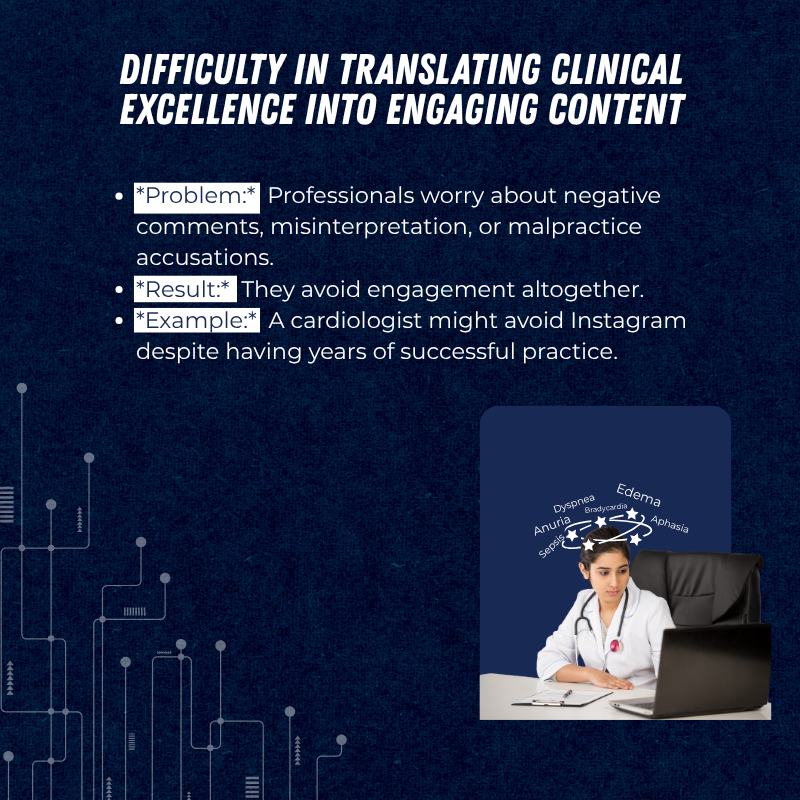
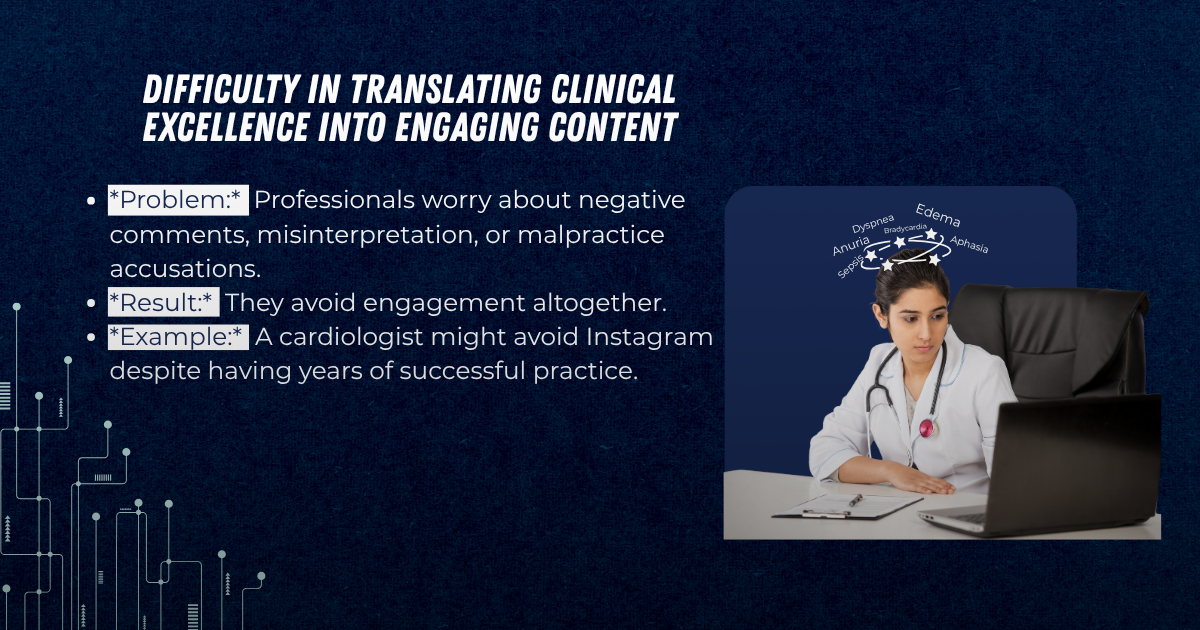
Difficulty in translating clinical excellence into engaging content

Clinical excellence is the backbone of quality patient care. Focus on translating clinical excellence into engaging content that connects with patients, empowers them, and improves their understanding of healthcare topics. Healthcare professionals strive for precision, compassion, and outcomes that improve lives. Healthcare is about giving patients the best care with skill, kindness, and results that help people get better. But when healthcare providers want to tell people about their services through marketing, it’s hard to make content that’s both accurate about the medical stuff and also interesting and understandable for patients.

Healthcare marketing needs to do two things:

  • Be right about the medical stuff.
  • Make patients feel connected and understand what’s going on.

Digital direct rule companies help people when they face difficulty. The problems in making medical expertise into interesting content.Ways to fix these problems. How healthcare providers can make content that shows their skills and connects with patients.

What is the difficulty in translating Clinical Excellence into Engaging Content?

The challenge in translating clinical excellence into engaging content lies in striking a balance between clinical accuracy and patient engagement. Healthcare professionals must ensure that the content is medically accurate and based on evidence, while also making it interesting, understandable, and emotionally engaging for patients. Using too much medical jargon can confuse patients, while oversimplifying might compromise medical accuracy or credibility. Clinical content often focuses on facts, whereas patients tend to connect with stories and emotions.

Some strategies to achieve this balance include:

  • Using patient stories to illustrate clinical outcomes in clinical excellence.
  • Creating visuals like infographics or videos to explain complex medical information to engaging content.
  • Focusing on patient needs and outcomes rather than just clinical details.
  • Ensuring content is empathetic and connects with patients on an emotional level.

This balance is tough because:

  • In clinical excellence, using too much medical jargon can confuse patients.
  • When healthcare providers simplify medical information too much in an attempt to make it more engaging or understandable for patients
  • Clinical content often focuses on facts of the medical, while patients connect with stories and emotions.

Making content that’s easy for patients to understand while keeping it medically correct and trustworthy is a big challenge

What does translating clinical excellence into engaging content Mean?

In the medical stakeholders like doctors, hospitals, and labs, these are experts in medical science and knowledge, and patient care, but when it comes to digital presence

  • Simplifying complex medical concepts involves breaking down the information into pieces that patients can understand without losing the core medical message. And some ways to do this include using plain language instead of medical jargon, using examples that patients can relate to, creating visuals like diagrams or videos to help explain things, and focusing on what matters most to patients, like outcomes or how it affects them. This approach helps patients grasp important medical information in a way that’s both understandable and relevant to them
  • Presenting information in a way that connects with a broader audience means tailoring the content so it’s understandable, relevant, engaging, and accessible. Using language and concepts that most people can grasp, focusing on aspects that matter to the audience, and using methods like storytelling, visuals, or examples to capture interest are key. Making the info easy to find, read, or listen to for people with varying levels of health literacy or tech skills also helps. This approach helps healthcare providers communicate effectively with diverse groups of people.
  • Balancing scientific accuracy with emotional engagement means that healthcare providers need to ensure their content is both medically accurate and evidence-based, while also connecting with patients on an emotional level. This involves presenting facts in a way that resonates with people, using storytelling or examples that evoke empathy or interest, and making the information relevant to patients’ experiences or concerns.
  • Effective translation of clinical research requires structured communication frameworks—not just simpler language. The most successful women’s health companies develop multi-layered communication models that maintain fidelity to research while creating meaningful connections.
  • The “evidence cascade” represents one such framework, where marketing messages link directly to their clinical foundations through a traceable chain of interpretation. This approach allows for simplified consumer-facing messages while maintaining transparency about the research foundation. Each simplified claim maintains a clear lineage to specific research findings.

Why Is It a Challenge?

It’s a challenge to balance scientific accuracy with emotional engagement because:

  • Scientific accuracy requires precision: clinics need to be medically correct and based on evidence.
  • Emotional engagement needs relatability: Patients connect with content that’s relevant to their experiences, emotions, or concerns.
  • These goals can seem at odds: the need to focus too much on scientific details might make content dry, while focusing too much on emotional engagement might compromise accuracy.
  • Avoiding oversimplification: Simplifying too much can lose medical accuracy or credibility.
  • Using storytelling effectively: Stories can engage patients emotionally while still conveying accurate medical info.
  • Understanding patient needs: Knowing what matters to patients helps tailor content for both accuracy and engagement.
  • Patient-Centric Messaging: Talk about what matters to patients – their needs, worries, and outcomes.
  • Storytelling with Care: Use real patient stories to show how healthcare works in a way patients can relate to.
  • Simplify without Dumbing Down: Break down tough medical info into easy-to-understand bits without losing the facts.
  • Use Engaging Formats: Use things like videos, pictures, and graphics to make content more interesting and easy to grasp.
  • Educate and Empower: Help patients understand their health so they can make better choices.
  • Collaborate with Content Experts: Work with people who know how to write about healthcare in a way that’s both accurate and interesting.

Using strategies like patient-centric messaging, storytelling with care, simplifying without dumbing down, engaging formats, educating and empowering patients, and collaborating with content experts helps healthcare providers create effective content. This content is both medically accurate and engaging for patients, helping them understand their health better and feel more in control. By focusing on what matters to patients and presenting info in an understandable and relatable way, healthcare providers can connect with their audience more effectively. This approach bridges the gap between clinical excellence and patient engagement.

Conclusion

In this article, we discussed that Clinical excellence is the backbone of quality patient care. Healthcare professionals strive for precision, compassion, and outcomes that improve lives. Healthcare is about giving patients the best care with skill, kindness, and results that help people get better. Balancing scientific accuracy with emotional engagement means that healthcare providers need to ensure their content is both medically accurate and evidence-based, while also connecting with patients on an emotional level. For more information, you can visit our website, Digital Direct Rule.

Categories
Medical

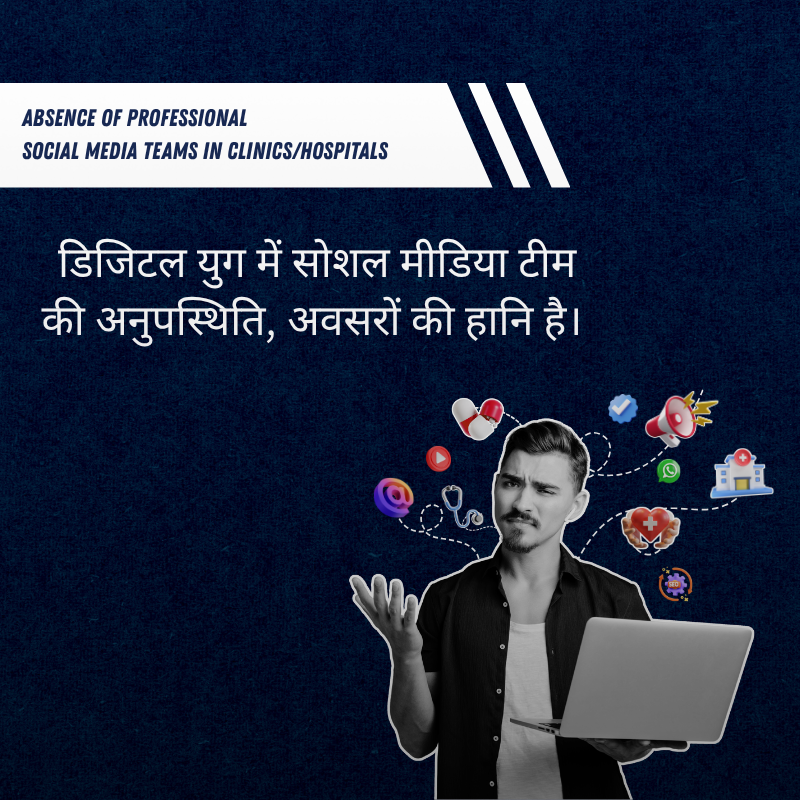
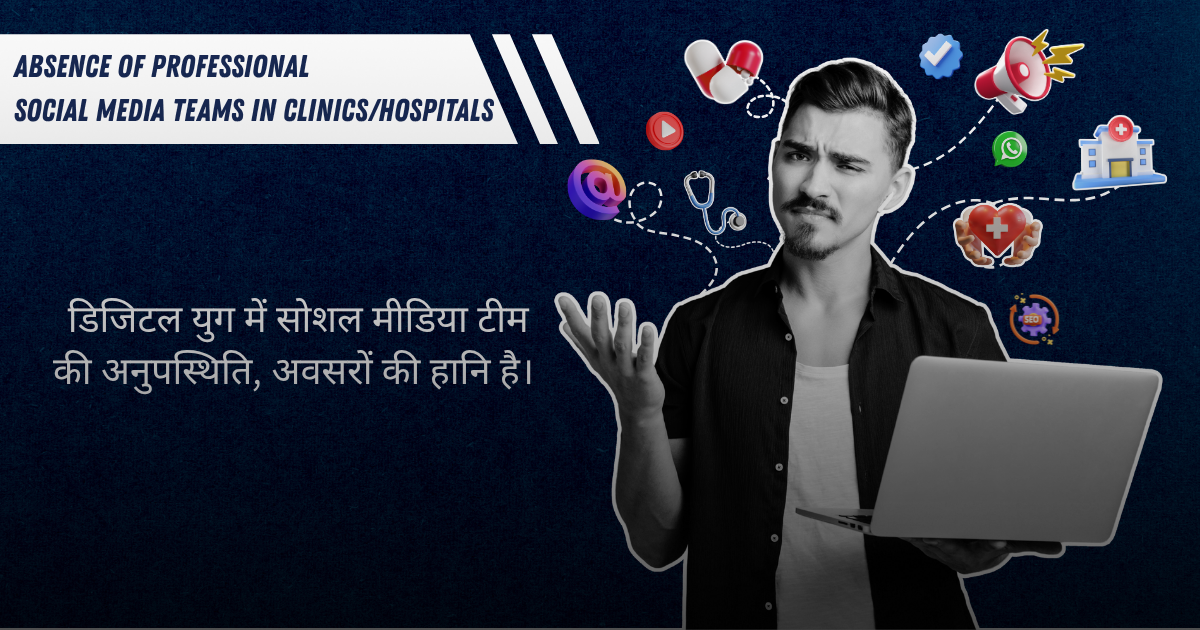
Absence of professional social media teams in clinics/hospitals

Absence of professional social media teams in clinics/hospitals: Social media has fundamentally changed how the world shares and gets information. Many hospitals and clinics struggle to effectively utilize social media, missing out on opportunities to connect with patients, share important health information, and build trust. This can result in a missed opportunity and a loss of confidence. Having a professional team can help healthcare organizations communicate effectively, share important information, and build strong relationships with patients. In this article, we will discuss this in detail.

Absence of professional social media teams in hospitals

Most people think social media is only for young people. However, this is not the case; healthcare professionals can also benefit from this platform. When it comes to the healthcare social media market, it`s simple to see how it might assist a practice.

Hospitals and clinics often lack a dedicated team to manage their social media presence. This can lead to:

  • Missed opportunities to connect with patients:- Hospitals and clinics often miss chances to interact with patients through social media, failing to share important health information, build trust, and respond to concerns. This missed opportunity can impact patient engagement and satisfaction, ultimately affecting the quality of care and relationships with patients.
  • Inconsistent messaging and branding:- Inconsistent messaging and branding can be like having a mixed-up identity – it’s hard for patients to know what to expect from a hospital or clinic. Consistent branding is like having a clear signature style – it helps build trust and makes a healthcare organization more relatable and memorable
  • Difficulty sharing important health information:-Without a strong social media presence, hospitals and clinics may miss the opportunity to share crucial health information, such as disease prevention tips, health alerts, and wellness advice. So this can leave patients and the community without access to reliable and trustworthy health information, making it harder for them to stay healthy and informed
  • Limited engagement and community building:- Hospitals and clinics may struggle to connect with patients and the community, limiting opportunities for meaningful interactions, feedback, and support. This can lead to a lack of trust, loyalty, and advocacy, ultimately affecting patient satisfaction and health outcomes. Digital Direct Rule. To overcome this, hospitals and clinics should prioritize digital engagement by creating interactive content ( polls, quizzes, Q&A sessions), responding promptly to online comments and messages, and sharing patient success stories and testimonials

Challengs of social Media in the hospital

Rules of engagement are ignored or misunderstood, and social media issues are likely to arise. Furthermore, if healthcare professionals don’t grasp the limits they have in a healthcare context vs. running a personal profile, these obstacles become a problem.

Responding to Negative Reviews on Social Media Platforms

Healthcare social media accounts, professional and compliant with the Health Insurance Portability and Accountability Act, keep you out of trouble. People may be upset by a comment made, or they may have been inconvenienced in some manner by your healthcare facility. So that they may leave a poor review or respond angrily to a post.

Time Consuming

Managing social media takes time, and healthcare professionals are already busy. Spending just an hour or two a week might not be enough to see real results. You need to invest time to get the benefits of social media.

Low-quality Information

The fact that the internet is available to everyone is a drawback. And this is because anyone can upload material on whatever subject they wish. The people become self-proclaimed experts and distribute erroneous information without conducting research.

Ignorance of Potential Risks
Absence of professional social media teams in hospitalsAdvanced algorithms on social media cater to their users by supplying them with content they will love.

Lack of Patient Confidentiality and Patient Privacy

When it comes to using social media, professionalism is another problem for many healthcare providers. Confidentiality and privacy of patient information are still just as crucial. So that social media is frequently perceived as less serious, childlike, or even less “respectable”. Healthcare providers face challenges on social media, like maintaining professionalism and protecting patient privacy. To address this, create simple guidelines for your practice to follow, ensuring a respectful and secure online presence

If you have concerns about this, set up social media guidelines for your practice to follow. After

Digital Direct Rule, this company suggests that healthcare organizations should invest in a dedicated social media team that can build trust, share valuable health info, and engage with patients. By doing so, they’ll improve their online presence, build their brand, and create a stronger community

The result of Not Having a Professional Social Media Team

If you do not have a professional social media team can have serious results for healthcare organizations. These include:

  1. Missed opportunities: Without a dedicated social media team, healthcare organizations may miss opportunities to connect with patients and share important health information.
  2. Inconsistent messaging: Without a consistent social media presence, healthcare organizations may struggle to build trust and credibility with their audience.
  3. Limited engagement: A lack of engagement with patients and the wider community can lead to a lack of brand awareness and loyalty.
  4. Negative online reviews: Without a social media team to monitor and respond to online reviews, healthcare organizations may struggle to address patient concerns and improve patient satisfaction.

A social media team can help healthcare organizations in many ways:

  • Create engaging content that patients love:- Creating engaging content means developing social media posts, videos, and stories that patients find interesting, informative, and enjoyable. This can include health tips, patient success stories, behind-the-scenes looks at healthcare teams, Q&A sessions with doctors, and infographics that explain complex health topics in a simple way.
  • Build a strong brand that people trust:- Building a strong brand means creating a consistent and recognizable identity for a healthcare organization that patients trust and respect. So this involves developing a unique voice, visual style, and tone that reflects the organization’s values and mission. By establishing a strong brand, healthcare organizations can differentiate themselves, build credibility, and foster loyalty among patients
  • Talk to patients and respond to their questions:- Talking to patients and responding to their questions means engaging in two-way communication on social media, where healthcare organizations actively listen to patient concerns, respond promptly to their queries, and provide helpful information. And share important health information that’s accurate and up-to-date

With a professional social media team, healthcare organizations can:

  • Build trust and credibility with patients:- By being transparent, responsive, and informative on social media, CarePlus Healthcare can show patients that they genuinely care about their well-being. This can lead to increased patient loyalty. Digital Directive for CarePlus Healthcare: Prioritize transparency, empathy, and responsiveness on social media to build trust
  • Providing expert advice and guidance, innovative approaches and solutions. Highlighting their expertise and credentials
  • Improve patient engagement and satisfaction:- Improving patient engagement and satisfaction means creating a positive experience for patients through effective communication, personalized care, and timely support. At CarePlus Healthcare, this can be achieved by:
  • Respond promptly to patient queries and concerns:-Respond to patient queries and concerns within 2 hours to show patients you care and value their time. This prompt response can be achieved through:
  • Providing relevant and accurate health information:- Digital Directive for Healthcare: Provide accurate and up-to-date health information that addresses patient concerns and interests. Ensure content is: reviewed by medical experts, Easy to understand, and Relevant to patient needs
  • Educate patients and the community about important health topics:- The community about important health topics by sharing valuable information on disease prevention, healthy lifestyle tips, and the latest medical research.

By having a dedicated social media team, healthcare organizations can make a big impact online and build a stronger connection with patients and the community. They can share valuable information, respond to concerns, and show patients that they care. Digital Directive Rule for Healthcare: Invest in a dedicated social media team to build a strong online presence, engage with patients, and share valuable health information. By doing so, Healthcare can make a big impact online and build a stronger connection with patients and the community

Conclusion

In this article, we discussed the absence of professional social media teams in clinics/hospitals: Social media has fundamentally changed how the world shares and gets information. For more information can visit our website Digital Direct Rule.

Categories
Medical

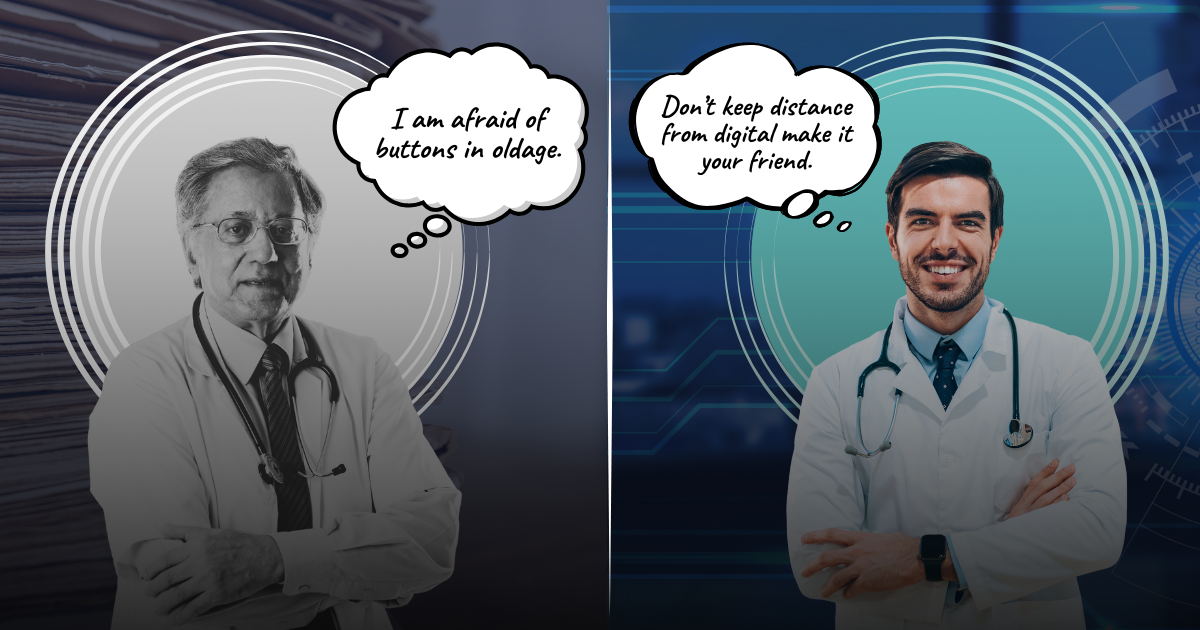
Lack of digital literacy among senior medical professionals

Lack of digital literacy among senior medical professionals: Digital literacy in healthcare refers to the ability of healthcare professionals to effectively utilize digital tools, platforms, and data systems to enhance patient care and service delivery. Many senior professionals and nurses face challenges in adapting to the new technologies, leading to inefficiencies and potential issues in patient care.. In India, many senior medical professionals have limited exposure to digital tools and platforms, making it challenging for them to navigate and utilize these tools effectively. In this article, we will discuss this in detail.

Lack of digital literacy among senior medical professionals

Lack of digital literacy skills can impede career readiness. Without proficiency in digital tools and technologies, they struggle to meet the evolving demands of the medical market. Job seekers and professionals must continuously upgrade their skills to stay competitive and emerging technologies for career growth. By embracing digital learning and staying adaptable, individuals can future-proof their careers in the evolving digital landscape.

It can also affect communication within a team and between departments. Professionals are increasingly utilizing electronic health records, telemedicine, and mobile health tools under initiatives such as the Ayushman Bharat Digital Mission (ABDM), thereby enhancing patient care and operational efficiency. It impacts all types of businesses, from small local businesses to multinational corporations, as it influences how effectively they can leverage contemporary technology to offer products/services or maintain market competitiveness.

  1. Limited Exposure to Digital Platforms
    • Limited exposure to digital platforms means your business isn’t getting the online presence it could have. Most people search online for a service, but your business is not visible where many people are looking. If you are not online, it might slow your growth.
  2. Resistance to Technology Adoption
    • The people are slow and fear to use new tools or digital solutions for their problems. They feel it may be harder to compete. But it is not hard; you should open the door for a new way of working and reaching customers.

What is Digital Literacy?

Digital literacy is about being able to find, evaluate, and share information effectively using digital tools like computers, phones, and the internet. And it mixes technological skills with thinking skills to create, judge, and share info online. This literacy helps you connect with others online, get your message out, and navigate the digital world confidently.

This review looked into how low digital literacy affects health. Digital literacy (DL) is about being able to use digital tools to find and able to use digital tools. So improving digital literacy can help people make better health decisions online and use digital health tools more effectively. Digital health literacy helps people navigate online health info, understand it, and use it to make better health choices for themselves or loved ones.

Challenges 

  1. Poor Understanding Tools:- If we are talking about the Senior medical professionals often face challenges with digital literacy, impacting their ability to effectively use digital health tools. It is the biggest lack of digital understanding. This can make it harder for people to adapt or feel comfortable with digital tools. We can help make transitions to digital systems smoother, provide training that fits people’s needs, and help balance digital and paper workflows..
  2. Hesitance to use technology:- Senior professionals who have been working for a long time are accustomed to paper-based systems, so it is easy for them. They may find it difficult to transition to digital platforms compared to junior professionals. Most of the senior professionals have a hesitation to use social public awareness. But our company, Digital Direct Rule, promotes those kinds of people.
  3. Inefficiency:- Our Company Digital Direct Rule is a stakeholder company, and we recognize the inefficiency in utilizing social media for public awareness. We promote senior medical professionals, including esteemed doctors, through our social media platforms. By highlighting their expertise and contributions, we aim to educate the public and foster trust in our healthcare system. Through targeted campaigns and engaging content, we will showcase the dedication and commitment of these medical professionals, ultimately enhancing public awareness and appreciation for their invaluable work.
  4. Risk of misinformation sharing:- The lack of digital literacy among senior medical professionals is a risk of misinformation sharing. Without proper work, doctors may accidentally spread wrong information, compromising patient care and public health. As a stakeholder company, we recognize the importance of digital literacy in today’s digital age. By providing targeted training and resources, Digital Direct Rule company can empower senior medical professionals to navigate the digital landscape effectively, ensuring they share accurate and reliable information that benefits patients and the broader community.

The role of digital Literacy in effective health protection

The evolution of modern healthcare underscores the important question of societal priorities in development. When distributing finite healthcare resources, decision-makers must weigh numerous factors and navigate a range of sometimes conflicting criteria, including equity, access, fairness, and effectiveness.

The World Health Organization (WHO) defines digital health as “the combination of health, as well as emerging areas, such as the use of advanced computing sciences in big data, genomics, and artificial intelligence.” For successful use of all available digital and informational possibilities, there is a need that health providers and patients to have at least a basic digital literacy. Digital literacy encompasses the skills necessary for the safe and discerning utilization of electronic media in professional settings, leisure activities, and communication.

– Individuals with higher digital health literacy are better equipped to manage their mental state. Individuals are also able to avoid negative emotions and prevent psychological issues. Individuals with higher digital literacy reported better long-term disease control.

What is the role of digital transformation in healthcare?


Digital transformation in healthcare refers to the comprehensive integration of digital technologies, data analytics, and innovative processes to enhance the delivery of healthcare services.
The need for a Digitally Literate Health workforce

The role of digital literacy extends beyond hospital settings. It is crucial for community-based healthcare providers, particularly in rural areas, where frontline health workers such as the primary point of contact for millions of patients.

Healthcare professionals need digital skills to provide better care. Digital literacy helps them:

Use technology efficiently: Access patient records, send prescriptions, and consult with colleagues online.
Make informed decisions: Analyze data, identify trends, and improve patient outcomes.
Improve patient care: Communicate effectively, share information, and provide personalized care.
Enhance patient safety by reducing errors, improving diagnosis, and streamlining care.
Increase efficiency by automating tasks, reducing paperwork, and focusing on patient care.
Stay competitive: Adapt to the changing healthcare landscape, improve services, and attract patients.

Benefits of Digital Literacy


More Time for Patients:
This helps senior medical professionals work more efficiently, reducing paperwork and freeing up time for patient care.
 Better Patient Care: Digital literacy enables senior medical professionals to access patient records, and they can give better care to patients. It lets doctors focus more on patients and less on tech struggles, making care more personal and effective. 

Staying Current: Digital literacy provides senior medical professionals with opportunities to stay current with the latest medical research, attend online conferences, and participate in online forums, helping them stay up-to-date in their field.
By being digitally literate, senior medical professionals can provide better care, work more efficiently, and stay current with the latest medical knowledge.

Improving Digital Literacy for Senior Medical Professionals

To help senior medical professionals improve their digital skills, consider these strategies:

Training Programs: Offer training sessions that teach senior medical professionals how to use digital tools and technologies
Mentorship: Pair senior medical professionals with colleagues who are skilled in digital technologies, providing guidance and support.
Easy-to-Use Technology: Provide digital tools that are easy to use and offer reliable IT support, making it simpler for senior medical professionals to adopt digital technologies.

How Social Media Helps Medical Professionals Connect Digitally


• Using platforms like LinkedIn, Instagram, or YouTube helps doctors showcase their medical expertise. This boosts their professional visibility, connects them with more people, and can build their reputation.
• Doctors can share accurate health tips, explain treatments, and bust health myths online. This helps people get trustworthy health info and make better choices. doctors can connect with patients and the public in a caring way, building trust.
• Posting regular content online helps doctors build authority and trust with patients consistent content shows patients that the doctor cares about sharing valuable info

  • Using digital tools lets doctors collaborate with peers and clinics all over the country. Attracts Younger, Tech-Savvy Patients. It helps connect with digital-native patients who seek doctors online.
  • Having a consistent digital presence helps your practice show up better in Google searches. It is easy to find online ways to help patients connect with you when they need help.
  • Digital tools let you respond to patient questions fast, post updates, or do live Q&A. This helps you engage with patients in real-time, making them feel heard.
  • Sharing knowledge online helps doctors position themselves as leaders in their specialty. Thought leadership builds credibility and connects doctors with patients.

Conclusion

In this article, we discussed that Senior medical professionals often struggle with digital technologies, which can impact patient care and efficiency. To address this, we can provide training programs, mentorship, and supportive infrastructure. By using digital tools, we can make patient care better, make workflows more efficient, and help senior medical pros succeed in today’s fast-changing healthcare world. And digital tools help doctors focus on what matters most – caring for patients. For more information, visit our website, Digital Direct Rule.